

The Market Shaping Accelerator was thrilled to receive 186 applications to our open call for ideas from around the world. To identify the Phase I winners, submissions went through three rounds of review and were evaluated by at least six separate referees from the MSA team and external area experts.
The best ideas can come from anywhere. It’s unsurprising, then, that the Phase I winners represent geographies across the globe. In the end, MSA identified 39 winning teams from 16 different countries that will each receive the $4,000 prize for their top quality submission.
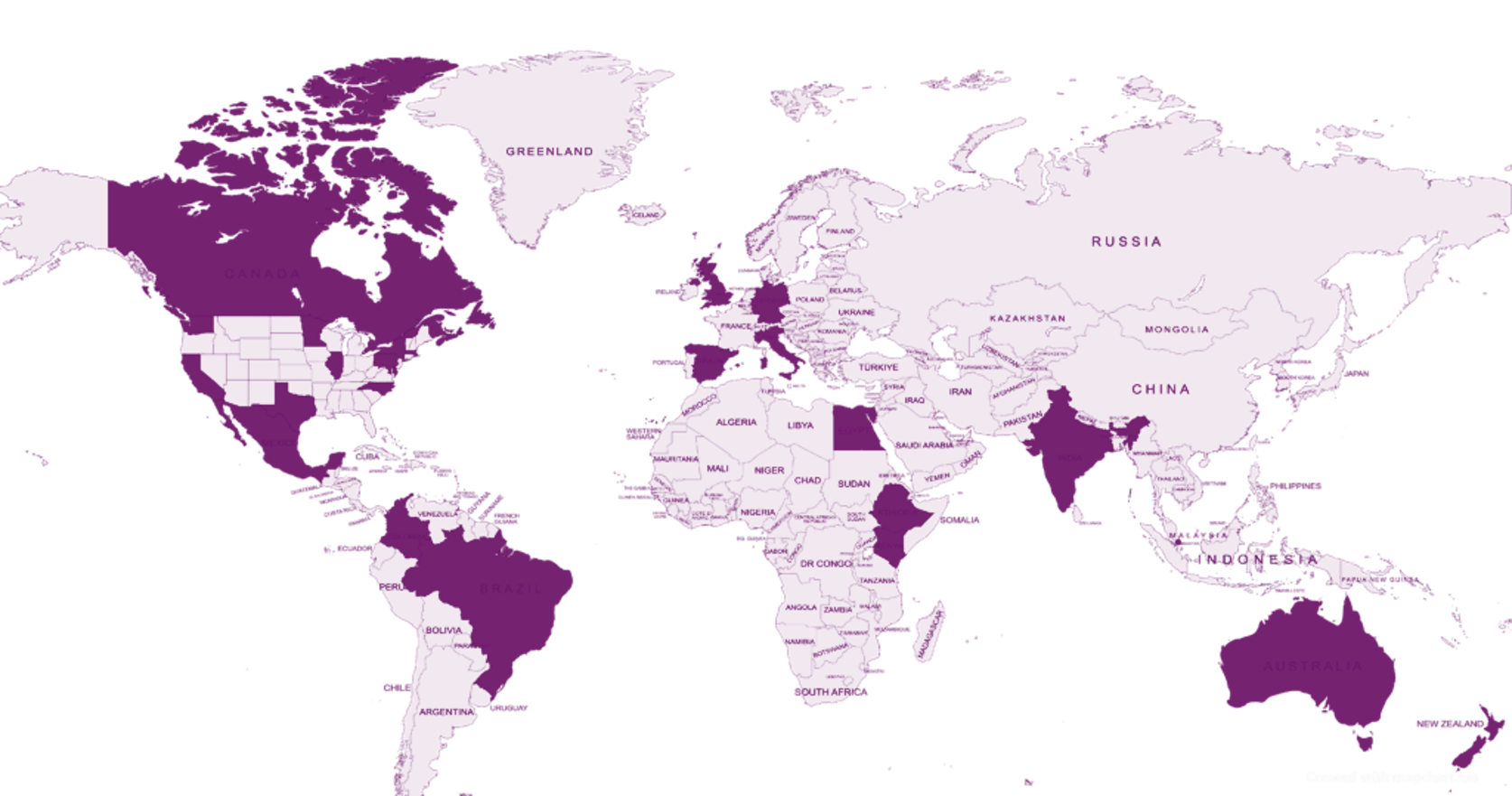
Ideas were wide-ranging – from decarbonizing hard-to-abate sectors like aluminum and concrete to creative ideas about building a modern pandemic surveillance system. The Phase I awards went to 22 different pandemic prevention ideas and 17 different climate ideas.
Pollution and climate change are classic cases of externalities: the polluter does not experience the full costs of their actions, which are experienced by the broader public. As a result, the commercial incentive to invest in green innovations is often far below the socially optimal level. How can we best construct a mechanism to incentivize the private sector to invest in green innovations? Which problem areas are most fruitful for policymakers and private funders to examine? MSA Innovation Challenge applicants had a wide range of ideas, from clean cooling to methane monitoring.
The commercial incentive to invest in innovations that aid in pandemic preparedness often far lag their social returns. Investments may only pay off years in the future if there is a future pandemic, and some interventions – like a high-quality, low-cost system to monitor for future outbreaks – have few to no private sector buyers. Our applicants had several ideas – from far UVC light to wastewater monitoring – about which problem areas in pandemic preparedness and biosecurity are in greatest need of attention, and how pull mechanisms could be used to align incentives to encourage and accelerate innovation.
Cellcraft Ltd
Conventional animal agriculture is responsible for large amounts of global emissions and environmental degradation. As meat demand only grows globally, newer methods of sustainably creating meat-like protein will become necessary to reach the world’s climate change goals. Alternative protein products, such as scalable cultured meat, could become a vital tool in the toolbox to reduce conventional meat’s climate impact.
Climate Adaptive Proteins
Biofermentation technology offers the potential to generate low-cost high-quality proteins regardless of climatic conditions. This could help improve food security and climate resilience in low and middle income countries. A pull incentive could accelerate the development and scale-up of this technology.
AirMiners
CO2 removal could help buy more time to combat climate change. However, as CO2 is, for the most part, a waste product, there is little market demand for CO2 removal services. A pull incentive could allow firms with different techniques — bioenergy with carbon capture, direct air capture, etc.— to compete to create a cost-effective, scalable, carbon removal product.
Clean Cooling Team, Clinton Health Access Initiative
As hundreds of millions of people enter the global middle class in tropical countries, the demand for air conditioners will soon skyrocket. Creating a market demand for affordable, clean cooling technologies could help ensure such a development does not harm the climate and strain overburdened electrical grids.
Instiglio
Purchasers of air conditioners do not fully internalize the climate impacts of their purchase. A pull mechanism may help accelerate the development of greener cooling methods before demand for cooling skyrockets worldwide in a warming world.
Instiglio
In many low and middle-income countries (LMICs), people use generators to provide electricity when the grid is out. However, these generators can be expensive and pollution-intensive. Greener, more sustainable methods may help people in LMICs save money and reduce the local environmental consequences.
Giving Green
Aluminum production is highly carbon-intensive, and its climate impact is only expected to grow. There is often little commercial incentive for firms to invest in researching cleaner techniques, such as improved anode technology or greener feedstock, if consumers are unwilling to pay a premium for it. A pull incentive could help encourage firms to invest in such greener methods.
Instiglio
Cement is highly carbon-intensive, and there’s often little commercial incentive to invest in discovering new methods to make it greener. The problem becomes worse and more urgent with rapidly increasing demand for cement in low and middle-income countries. A pull mechanism may be necessary to provide the incentive to invest in innovation towards greener solutions, such as substituting lower-carbon material into concrete or using a more energy-efficient or greener feedstock.
Maritime Accelerator for Resilience
Ocean shipping is one of the largest global contributors to pollution and is collectively responsible for roughly 3% of global carbon emissions. Purchasers of shipped products are often unwilling to pay a premium price for greener methods of shipping, so there is little incentive for shipping lines to use more sustainable methods. As a result, there is ample room for social gains in lower-emission ship design and shipping fuel. A pull incentive can help incentivize innovation that can produce these gains.
Giving Green
Steelmaking is highly pollution-intensive, producing over 1 ton of CO2 per ton of steel produced, and is collectively responsible for roughly 8% of global emissions. However, as a commodity product, there is little reason any commercial purchaser would buy a greener steel product at a premium price. This creates little incentive for researchers and firms to invest in creating cleaner technology. A pull incentive may help in accelerating the development of a cleaner method, such as using cleaner fuel stocks for thermal energy, electric arc furnaces, and many more.
Peter Richards
Voluntary carbon markets often struggle because market participants lack sufficient information about the additionality, source, and permanence of pollution abatement interventions. This is partially a result of insufficient measurement and verification technology. Innovation to create technology that can affordably and accurately measure methane and other greenhouse gas emissions sources could help these pollution markets become more viable.
Francisco Del Villar
Inventing technology that provides accurate, high-resolution greenhouse gas emission monitoring is a classic case of a market failure where there is little commercial incentive to invest. A demand-pull incentive could help spur creation of this socially valuable technology.
Al Dawara
Cattle agriculture releases a large amount of emissions, but farmers have little incentive to invest in methods to reduce that impact. Innovative new techniques, such as changes to a cow’s diet, may be helpful in reducing that impact. A pull incentive could help jumpstart research to encourage commercialization and lower costs in greening cattle agriculture.
Peter Richards
Fertilizer production results in the release of large amounts of greenhouse gasses, and purchasers of fertilizer have little incentive to pay a premium for a less pollution-intensive product. As a result, manufacturers have little commercial reason to invest in discovering newer, cleaner methods. A pull mechanism could help provide extra incentive to research and develop these new techniques.
Instiglio
Fossil fuel-powered two-wheelers are a common form of transportation in low and middle-income countries, producing large amounts of pollution that harms both the climate and the health of surrounding residents. A pull mechanism to incentivize cleaner–but still highly affordable and convenient–methods of transportation would be socially valuable.
Desal Water
Climate change may put pressure on freshwater resources in many low and middle-income countries, intensifying competition over shared freshwater sources like rivers and lakes. Simultaneously, many jurisdictions price water below market price, which limits the incentive for private firms to invest in improved methods of producing freshwater. A pull mechanism for more energy-efficient desalination and other measures to increase freshwater availability could aid humanity’s efforts to ensure water security.
AMR Funding Circle
Antimicrobial resistance is responsible for millions of deaths worldwide, and externalities caused by overprescription may not be properly accounted for during prescription decisions. In the future, sufficiently antimicrobial-resistant bacteria could become the basis for a pandemic. Technological innovation for diagnostic tests for more rapid diagnosis could help ameliorate this problem.
Charity Entrepreneurship
Antimicrobial resistance costs the world more than 47 million disability-adjusted life years per annum. However, the market incentive for pharmaceutical companies to invest in stopping this problem is inadequate—pull funding mechanisms can accelerate vital antimicrobial resistance research and development.
Max Langenkamp
A potential risk vector for an engineered pandemic would be through a hack of a facility that hosts or has the ability to create deadly viruses. Bug bounties and other incentives could help enhance security at high biosecurity risk locations, such as DNA synthesis facilities.
(German) Federal Agency for Disruptive Innovation – SPRIND
A pull mechanism can be used to incentivize the creation of a broad-spectrum antiviral, particularly for coronaviruses. Such an invention could both prevent future pandemics and help respond quicker in case of an outbreak.
Panoplia Laboratories
A demand-pull incentive could motivate firms and researchers to develop broad-spectrum medical countermeasures to combat future pandemics before they even occur. Private firms are not adequately rewarded for the development of new technologies that may have other socially valuable uses beyond the lifespan of the patent, e.g. during a future pandemic. A well-designed pull mechanism could make broad-spectrum countermeasures a crucial part of the pandemic-fighting toolkits.
Petya Tsoneva
Rapid, cheap, and accessible diagnostic tests could help combat the next pandemic. Today, high-quality PCR tests can take anywhere from a few hours to a few days to get results—in a pandemic, one could spread the disease during that crucial time period. But where’s the commercial incentive to invest in this technology as the pandemic wanes? There is great social value in creating these tests now, before another pandemic strikes.
Jakob Jonnerby
Cheap, sensitive, and non-invasive diagnostic tests (such as saliva tests) could help detect infectious diseases earlier and prevent outbreaks before they take root. However, there is inadequate commercial incentive to invest since the beneficiaries of these tests are often not the purchaser themselves but instead the people around them who could become infected.
Technologies for Pandemic Defense, Convergent Research Sequencing Roadmap Group
Rapid, point-of-care metagenomic sequencing could help identify pandemics faster. There is little incentive for firms to invest in this kind of innovation if hospitals and other entities do not demand it—that’s where a pull mechanism could be most useful.
Mauricio Shiavo
Innovation in diagnostic tests for zoonotic diseases could enhance biosecurity, and the creation of greater commercial incentive to innovate in the space could help accelerate that innovation.
1Day Sooner
Researchers need a way to identify what features can trigger an immune response that blocks transmission, not just infection. This would have public health benefits beyond individual benefits to the patient. A pull mechanism could incentivize researchers to discover these “correlates of protection” that could be used to accelerate the development of vaccines and treatments in the case of a future pandemic.
Dendritic.bio
Early warning systems for pandemics could have outsized social benefits, giving public health authorities the lead time they need to mount a response before the problem grows out of hand. However, commercial incentives to create such systems are minute, as there are few potential buyers, resulting in inadequate private investment for innovation in the space. A pull mechanism, by creating greater market demand, could accelerate the development of crucial early detection systems.
GeneSys
A pull incentive could speed up the construction of an early warning system for waterborne pathogens. Currently, there is little commercial incentive to invest in such technology because there are few potential purchasers for such a product. However, the benefits of such a system on pandemic prevention could far exceed the costs.
Dognosis Technologies
Novel technologies like volatolomics—a passive and real-time measure already used in cancer treatment—could help catch disease outbreaks before they become pandemics. A pull incentive may be needed to incentivize investment, as there is little incentive for medical companies to look for pandemic applications of existing technologies.
Aqualert
Early pandemic detection—such as through sewage monitoring—is a vital social good, but there’s little commercial incentive for private firms to invest in innovation in this area.
Technologies for Pandemic Defense
Innovation is needed to create a pandemic early warning system, with large needed improvements for affordable and effective aerosol detection. Aerosol detection of pandemics is a public good, and hence,there’s little private demand for such a product. As a result, private firms may be under-incentivized in researching innovative techniques to improve our detection capabilities.
Violet Coalition (1Day Sooner, The OSLUV Project, and Convergent Research)
Shared indoor spaces are some of the highest risk places for pathogen transmission. Far-UVC technology could help reduce this channel, but there is little commercial incentive to develop it absent a clear, consistent, and bankable demand signal which is currently lacking. A pull mechanism could help stimulate greater research and development in this domain.
Lacombe França, Ellertson
A pull incentive to destroy pathogens in indoor air—such as far-UVC—could help rapidly reduce the transmission of airborne diseases. However,owners of shared indoor spaces have little private incentive to invest in purchasing such technology, meaning that there’s little commercial incentive to develop it. While research is currently highly promising, there is still much work left to be done that needs incentivizing.
Benjamin Stewart
Highly effective PPE may be necessary in a future pandemic, which could be even deadlier than COVID-19. Convincing essential workers to go to work during a deadlier pandemic would be near impossible without substantial improvements in PPE technology. However, there is little commercial incentive to invest in these products pre-pandemic when few are buying high-quality PPE products. A pull mechanism could create an incentive to invest in creating such a product now, before the emergency occurs.
Technologies for Pandemic Defense
Supply chains for PPE, like disposable respirators, are vulnerable to shocks in the case of a future pandemic, heightening the need to stockpile PPE before the emergency actually occurs. Unfortunately, there is little commercial incentive for private firms to invest in surplus supply before the emergency hits. A pull mechanism to incentivize the creation of easy-to-use, highly-effective PPE could thus have long-lasting benefits in preventing pandemics.
Vaishnav Sunil
Cost-effective powered air purifying respirators that sidestep the need to specially fit the entire population could be vital in the next pandemic, and a pull mechanism could incentivize researchers to innovate in the field sooner rather than later.
Crowd Funded Cures
COVID-19 demonstrated that existing drugs and medical innovations can often have uses far beyond their original intended purposes. However, patent rules often mean there is little commercial incentive for companies and researchers to find these novel but socially valuable uses (such as for pandemic outbreaks) for existing drugs. A pull mechanism could help rectify that.
Oscar Delaney
Tuberculosis, which kills 1.5 million people per year, is both a massive health challenge in its own right and could be used as a platform for future mutations or designed pathogens. However, the commercial incentive for innovation is limited by both the low ability-to-pay of many patients in low- and middle-income countries and the inability for pharmaceutical companies to make money off of limiting TB’s potential role in a future pandemic. A demand-pull incentive could help accelerate the creation of tools that combat tuberculosis.
Special thanks to our excellent external experts who reviewed these applications, including: